Sara Sheridan

Colin Mackie


Iain Quinn

held at the Renfield Centre, 260 Bath St. Glasgow
Attendance: There were 62 members and visitors attending the first meeting
of the club’s 2025/2026 session.
Welcome: President McNae welcomed members and friends to the September
meeting.
He reminded everyone of the safety exits and procedures in the unlikely event
of an emergency.
We were also reminded to check that our mobile phones were on silent setting
or turned off so as not to interupt the meeting or speaker.
Weather Check - in the event of inclement weather, please check the website
for possible cancellation of meetings before heading out.
Apologies: There were apologies tendered from Robin Muir, Shona Crozer,
John Short, Peter Mortimer, Ruaraidh Clark and Margaret McCormack.
Minutes: President McNae enquire if everyone had seen a copy of the minutes
for the April 2025 meeting, either by email or a printed copy and asked if there
were any amendments or matters arising.
There being no amendments or matters arising for the April 2025 minutes,
they were passed on a proposal by Iain Henderson and seconded by
Dominic D’angelo.
President’s Report: President McNae reported on the club’s Summer
activities.
As ever, the Tappit Hen Bowling night was good fun and enjoyed by all who
attended. This years winner of the trophy was Colin McCormick, the club’s
membership secretary.
The Summer outing by vintage bus was enjoyed by all and included a trip to
Cathkin Braes before continuing on to St Enoch-Hogganfield Church where we
were welcome to inspect the many archive objects and paperwork pertaining to
the former church at St Enoch Square.
A most enjoyable lunch and refreshments were generously provided before the
bus proceeded home to Bridgeton Garage, where Stephen Booth gave us a
guided tour of the main shed before we wandered around the many and varied
vehicles kept there.
Gavin reported that progress was being made on our 125th Anniversary book
and that the planning was well in advance.
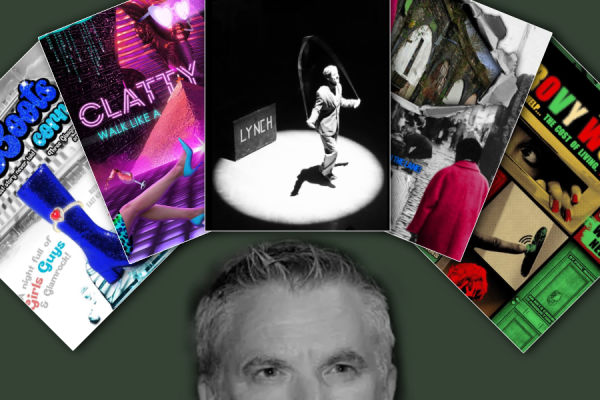
Tonight’s Speaker: Paul Moore on ‘The Dear Green Place’.
President McNae introduced Mr Moore, playwright, actor and director, whose
theme was articulation.
Mr Moore started with his childhood memories of being brought up in Church
Street, where the church and primary school environment led him to realise his
potential as an author and actor.
As he got older he realised that there was more to Glasgow over the other
other side of the River Clyde from the Gorbals. He joined a training school for
priesthood having been encouraged by John Troy. However, he “escaped” and
found that the Glasgow University Drama Club was more his style.
After leaving Glasgow, he taught Shakespeare and formed a theatre group for
homless people over in Vermont, USA.
On returning to Glasgow, where he believes the Covid epidemic and
subsequent lock downs devastated Scottish theatre, he began writing and
producing many plays about and for Glasgow audiences. Several examples of
his work were displayed on screen.
His concluding remarks were to encourage everyone, being actors, to let their
stories be known and keep articulation alive.
Q&A: There were interesting questions and answers from both the audience
and Paul.
Quiz: A statue of J. Reid, a locomotive builder was shown with the ‘question as
to where this statue can be seen’, with a choice of three alternative sites given.
The correct answer was Springburn Park. The winner picked out of the “hat”
was Steven McFarlane.
Vote of Thanks: President McNae thanked tonight’s speaker, Paul Moore, on
his very interesting and enjoyable talk. The members and friends present gave
Paul an enthusiastic show of appreciation.
AOCB: None
Close: There being no further business, President McNae wished us a safe
home and reminded us of the next meeting on Thursday 9th October, ‘The
People’s Palace’ by Peter Mortimer.
Stuart Little for Recording Secretary
held at The Renfield Centre, 260 Bath St. Glasgow
Attendance: There were 50 members and visitors attending the October
meeting.
Welcome: President McNae welcomed members and friends of the OGC to the
October meeting.
He reminded everyone of the safety exits and procedures in the unlikely event
of an emergency.
We were also reminded to check that our mobile phones were on silent setting
or turned off so as not to interrupt the meeting or speaker.
Weather Check - in the event of inclement weather, please check the website
for possible cancellation of meetings before heading out.
Apologies: There were apologies tendered from Gaynor MacKinnon, Shona
Crozer, Allison Ewing, Joan Whitelaw, Ruariadh Clark, Jim Watson, Alison
Sannachan, Frank Lovering and Cilla Fisher.
Minutes: President McNae enquired if everyone had seen a copy of the
minutes for the September 2025 meeting, either by email or a printed copy
and asked if there were any ammendments or matters arising.
There being no amendments or matters arising for the September 2025
minutes they were passed on proposal by Annette Mullen and seconded by
Dominic D’angelo.
President’s Report: President McNae reported that Robin Muir had recently
decided to step down from his role as Vice-President. We wish him well and
hope to see him at ordinary meetings in the future.
We were informed that club leaflets were available for distribution, Facebook
has been updated, new photographs have been added to the club’s website
and progress is being made on the 125 book.
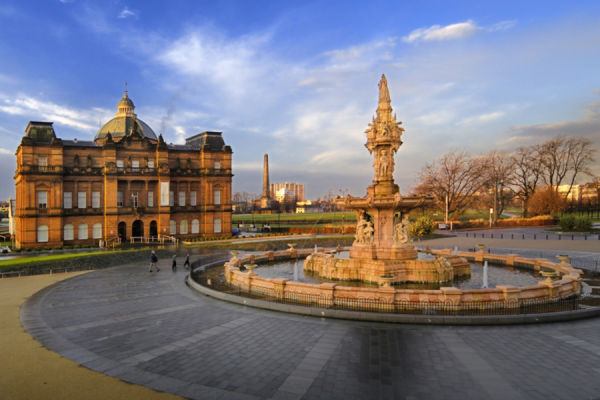
Tonight’s Speaker: President McNae introduced tonight’s speaker, Peter
Mortimer and his talk “The People’s Palace”.
Being a former club President, Peter is no stranger to the OGC and presented a
well illustrated and humorous talk on a much-loved Glasgow building.
The initial idea for The People’s Palace occured a number of years before the
building was opened. A fund was started in 1866 and raised £2,500 from the
sale of the bleaching green and £18,000 from Glasgow Corporation.
There were other People’s Palaces around the world; the first in London’s Mile
End 1887, Connecticut 1887, Zurich 1898, Edinburgh Grassmarket 1902 and
one in New Zealand.
Lord Rosebery opened our People’s Palace on 22nd January 1898, to a design
by Alexander B. McDonald and William B. Whitie. The building construction cost
was £32,000.
The ground floor space was intended to be a reading room and recreation
space, with a museum on the first floor.
The exterior is clad in red sandstone from Dumfries and decorated with
sculptures by William Kellock Brown, representing Science, Shipbuilding, Art,
Mathematics, Sculpture, Engineering, Textiles, and Progress.
The adjacent Winter Gardens was a popular venue for music and at times over
2,500 people attended the likes of pipe bands etc.
Peter showed slides of various sections over two floors, including a Wartime
shelter, a steamie, as well as items from Barrowland Ballroom, Duke Street
Prison (closed 1958), Benny Lynch (boxer) and the most popular dislplay, Billy
Connolly’s “Big Banana Boots”.
Since 2004 the building has been undergoing a makeover with the council
describing it as a “Restore, Reimagine and Enhance”, creating a dynamic,
community-led museum that celebrates the city’s history, it is due to be
completed in 2027. £35.9 million pounds has been raised by Glasgow City
Council and the Lottery Fund.
On its opening, Lord Rosebery declared that the People’s Palace was “Open to
the people for ever and ever”, a sentiment still applicable today.
Q&A: There was an interesting and lively session of questions and answers.
Quiz: Q - Which Queen Consort is Glasgow’s Queen Street named after?
a) Mary of Teck
b) Charlotte of Mecklenburg-strelitz
c) Caroline of Ansbach
d) Caroline of Brunswick
The correct answer was B and Emma Gibson was the lucky winner.
Vote of Thanks: Glen Collie thanked Peter on his very enjoyable and
interesting talk. All members and friends of the club present gave Peter an
enthusiastic show of appreciation.
AOCB: None
Close: There being no further club business, President McNae wished us a safe
home and reminded us of the next meeting on Thursday 13th November when
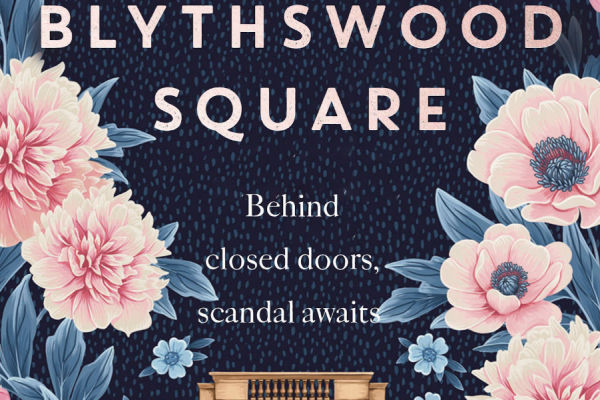
Sara Sheridon will be telling us about “The Secrets of Blythswood Square”.
Stuart Little for Recording Secretary
held at The Renfield Centre, 260 Bath St. Glasgow
Attendance: There were 48 members and visitors attending the November meeting.
Welcome: President McNae welcomed members and friends to the November
meeting, pointing out safety exits and a reminder to switch oM mobile phones.
Weather check…. In the event of inclement weather, please check the website for
possible cancellation of meetings before heading out.
Apologies : Tendered from Shona Crozer, Stuart Little, Colin McCormick, Ruaraidh
Clark, Peter Mortimer, Anna Forrest, Sallie Marshall, Cilla Fisher
Minutes: President Mcnae enquired if everyone had seen a copy of the minutes for the
October meeting, either by e-mail or a printed copy, and asked if there were any
amendments or matters arising.
There being no amendments or matters arising for the October minutes they were
passed on proposal by Irene Louden and seconded by Iain Henderson.
President’s Report : President McNae reported that the November Directors’ meeting
had been held at the Trades House in Glassford Street. The main purpose being to view
items from the Old Glasgow Club library. Carry Parry, Honorary Archivist of the Trades
House, looked out some interesting items including scrapbooks which those present
could have studied for much longer!
Moving on to the Old Glasgow Club Facebook, President McNae reported that the
Hampden Bowling Club, which has done so much to preserve it’s heritage, has not been
able to renew its current lease terms with City Building Glasgow. As a consequence,
Hampden Bowling Club took the decision at a General Meeting of members that its only
option was to close its doors on the 28th February 2026. The Facebook post had been
our biggest engagement yet. He reported that plans are moving along with our 125th
Anniversary book.
Tonight’s Speaker: President McNae said he was delighted to introduce tonight’s
speaker, Sara Sheridan, Scottish activist and writer. A number of club members had
become aware of her writing at the end of last year after reading the Secrets of
Blythswood Square, The Fair Botanist and the Mirabelle Bevan series beginning with
Brighton Belle. A number of tonight’s visitors were obviously fans. He said Sara
predominantly writes historical fiction but also a variety of genres of which he was sure
she would tell us more about …………..
And she did! Telling the notetaker at the beginning that it she would not be able to keep
up with her – and she was quite correct!
Sara told us she was brought up in the Merchiston area of Edinburgh and her favourite
childhood book was Heidi. Her love of history came from her dad, an antiques dealer.
He would weave stories around numerous objects. This gave her a connection with both
the object and the era it was from. The objects help to weave fashion, culture and
politics into the stories.
She writes across two main historical periods - the early 19th and the mid 20th
centuries.
The Mirabelle Bevan series of books begins in the post-war austerity of 1951. Inspired by
a story her dad told her of a mysterious and well-dressed woman on Brighton beach.
We were told that Sara is obsessed with female history and all of her work relates in
some way to memorialising the lives of women from the past. From Charlotte Nicholl, a
Glasgow heiress with a scandalous inheritance, Ellory McHale, a working-class female
photographer, both navigating societal expectations in Victorian Glasgow. Two strong
women in 1822 Edinburgh, Elizabeth Rocheid, a widowed botanical illustrator seeking
purpose, and Belle Brodie, a witty courtesan and perfume maker with a deep interest in
botany. Mirabelle Bevan the fearless Brighton based heroine - are some of her
historical fiction characters.
Sara told us that as a woman, if you lived in Scotland in the 1500s, there was a very good
chance that you, or someone you knew, would be tried as a witch. Witch hunts ripped
through the country for over 150 years, with at least 4,000 accused, and with many
women's fates sealed by strangulation, followed by burning. The book How to Kill a
Witch, was inspired to correct this historic injustice. How to Kill a Witch tells tragic
stories, helping us comprehend the underlying reasons for this terrible injustice, and
raises the serious question - could it ever happen again?
After reading about Rebecca Solnit’s project – the City of Women - a map which
renamed the stops on the New York subway after women, Sara was keen to do
something about women’s history in Scotland.
Historian Bettany Hughes estimated in 2016 that female material makes up only 0.5% of
recorded history. Sara discovered that in the UK only 15% of statues are raised to
women and most of those to Queen Victoria.
Sara felt so strongly on this subject she got a commission to write Where are the
Women? An imagined guide to the hidden heroines in Scottish history. – where women
are commemorated in statues and streets and buildings dedicated to real women,
telling their often unknown stories.
The notetaker has not done justice to all the stories told to us by Sara. Frederick
Douglas of Slane the famous abolitionist, picked a fight with the Free Church of
Scotland (formed in 1843) for accepting donations from slaveholders in the U.S. to build
their churches, famously demanding they "Send back the money," creating significant
controversy and debate during his 1846 tour, though he insisted he wasn't against
religion itself, just its complicity in slavery.
The influx of the Gaels – often portrayed as not the brightest but often speaking three
languages. Mhairi MacDonald, blind character in the Fair Botanist using sense of smell
and taste and crucial to the distillery’s success.
How the church tired to control life in general? A secret cockpit in Hope Street? Isabella
Elder’s philanthropy.
We were encouraged to think of generations rather than dates.
Of many people through the centuries, saying that we are all of these stories. Where we
come from Why we are Where we are. If we don’t know where we come from we don’t
know where we are going.
Q&A : There was a good selection of questions – advice to Melissa Friel in connection
with the 125 Anniversary book. A question on Mary Barbour’s statue which led to
discussion on Dorothy Stevenson, best selling Scottish writer (1872 -1973) though we
know her cousin Robert Louis Stevenson much more so. Mo Mowlam, the catalyst that
led to the signing of the 1998 Good Friday Agreement. A question on the economics of
being an author.
Vote of thanks – given firstly by Gavin McNae but then, reminded by the Secretary, that
he had indeed asked her to do so. It seemed only fitting considering the main subject of
the evening!
Quiz : The answer to the quiz question Who is Hope Street named after? was Rear
Admiral Sir George Johnstone Hope. The quiz was won by Jim Mearns.
AOCB : None
Close : There being no further business President McNae reminded everyone that the
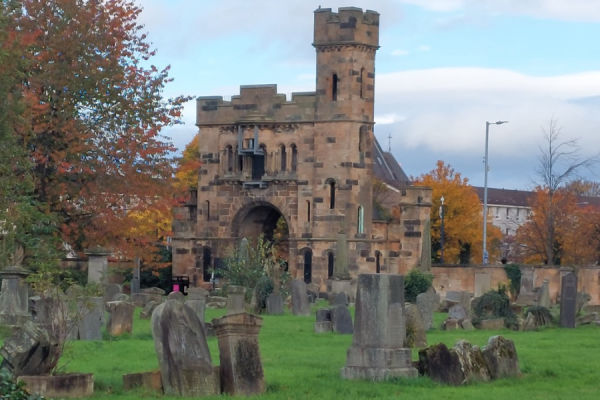
next month’s speaker would be Colin Mackie of the Southern Necropolis “ A Window on
Time “ He wished everyone a safe journey home.
Joyce McNae
For Recording Secretary
held at The Renfield Centre, 260 Bath St. Glasgow
held at The Renfield Centre, 260 Bath Street, Glasgow
to be held at Renfield Ctr, 260 Bath Street, Glasgow
to be held at Glasgow City Chambers